Background and Objectives: Robust evidence has shown that comprehensiveness lowers health care costs and physician burnout while improving quality. However, data suggest that scope of practice of family physicians has been decreasing. Our objective was to explore self-reported reasons for not providing inpatient care or deliveries by practice type.
Methods: We used data from the American Board of Family Medicine 2016–2024 National Graduate Survey and 2017–2024 Continuing Certification Questionnaire. Both surveys had a common question on type of principal practice site and asked about delivering babies and providing adult inpatient care. Those who did not provide those services were asked follow-up questions. We analyzed reasons for not providing deliveries or inpatient care by practice type.
Results: Our sample included 13,653 early career and 44,908 mid- to late-career family physicians. Early-career physicians were more likely to deliver babies and provide inpatient care than mid- to late-career physicians. Among those interested but not providing, lifestyle considerations were the first or second most common reason given for not delivering babies or providing inpatient care. Academic practice had the lowest rates of unavailability as a reason for not providing care, but hospital/health systems had similar rates to many other types of practices.
Conclusions: The reasons for not delivering babies or providing inpatient care are multifactorial. Our findings suggest that many physicians are interested in providing inpatient care and delivering babies, but are limited by both their employers and personal interests or constraints.
The need for high-quality, accessible primary care as the foundation for America’s health system was reaffirmed with the release of Implementing High-Quality Primary Care: Rebuilding the Foundation of Health Care.1 One critical and unique component of high-quality primary care is comprehensiveness, which was defined by a 1978 committee of the Institute of Medicine as the “ability of the primary care team to handle the great majority of the health problems arising in the population it serves.”2 Comprehensiveness lowers cost of care, reduces the number of hospitalizations,3 and reduces rates of physician burnout.4 However, data suggest that scope of practice of family physicians has been decreasing,5-8 particularly in urban areas.9 The gap between preparation of family physicians and actual scope of practice may be widening10,11 and is especially pronounced in delivery of maternity services.12 Further, family medicine training, based on curricular requirements set by the Accreditation Council for Graduate Medical Education, may not be aligned with the current family medicine practice environment.11
Past research into the drivers of a physician’s scope identified personal, workplace, environmental, and population factors.13,14 Personal factors include family circumstances, desired place of residence, and work-life balance. Workplace factors include leadership, culture, administrative challenges, and staff competencies. Environmental factors include geography, local availability of other health care professionals, regional economics, and health care policies. Population factors that affect scope of practice include community composition and need.13
There is a known association between practice type and family physicians’ scope of practice, with family physicians at rural health clinics and academic clinics practicing a wider scope than those at hospital-owned practices.15 Most physicians are now employed by hospital systems or corporate entities.16,17 Family physicians in these settings may have limited autonomy to practice their desired scope; employed family physicians have noted that decisions by administration to departmentalize services has narrowed their scope of practice.13 However, a recent study of graduates from a single residency found that institutional pressure for a narrower scope was cited by only 25% of respondents, behind personal preference (48%), work-life balance (33%), and location/local patient needs (31%).18 The objective of our study was to determine reasons for not providing inpatient care or deliveries by practice type for family physicians who primarily provide outpatient continuity care.
In this descriptive study, we used data from the American Board of Family Medicine (ABFM) 2016–2024 National Graduate Survey (NGS) and 2017–2024 Continuing Certification Questionnaire (CCQ). The NGS is administered to ABFM diplomates 3 years after graduation from residency and respondents are representative.19 The CCQ is completed by family physicians seeking to continue their certification. It is a mandatory component of continuing certification, achieving a 100% response rate.20 During our study period, the CCQ was completed 10 years from residency graduation and in 7 to 10 year intervals throughout a family physician’s career.
Both the NGS and the CCQ asked if the physician provides direct patient care and, if so, if they provide outpatient continuity care. In both surveys, respondents providing direct patient care were asked if they deliver babies and if they provide adult inpatient care. Those who did not provide these services were asked follow-up questions on the reasons why, allowing respondents to check all potential reasons that apply without ranking them in importance. The survey did not ask questions about reasons for not providing other services. Potential reasons for not delivering babies included (1) inadequately trained, (2) not available in the practice I joined, (3) challenges with privileging, (4) liability/fear of lawsuit, (5) billing is a hassle, (6) poor reimbursement, (7) malpractice insurance too costly, (8) lifestyle considerations, (9) not interested, and (10) other. Potential reasons for not providing adult inpatient care included (1) inadequately trained, (2) not available in the practice I joined, (3) challenges with privileging, (4) billing is a hassle, (5) poor reimbursement, (6) lifestyle considerations, (7) not interested; and (8) other. Both surveys had a common question on type of principal practice site with 11 response options.
We limited our sample to those primarily in outpatient continuity care in the United States. Then, we described our data by cohort (NGS as early-career and CCQ respondents as later-career physicians) and assessed variation in delivering babies or providing inpatient care by demographics and practice type. Then, to determine whether family physicians who were not delivering babies and/or not providing inpatient care were being limited by their employers or by their own interests, we conducted a series of bivariate analyses. First, we compared the percentage of respondents selecting each reason for not providing deliveries or inpatient care by whether they selected “not interested” as an option. If they did not select “not interested,” we inferred that they were interested. Next, we calculated the percentage of respondents in each cohort by each practice type who indicated that deliveries or inpatient care were “not available” at their practice. Third, to further investigate the association between interest and availability, we calculated the percentage of those not providing each service who were interested, where the ability to provide the service was not available. We performed all analyses with SAS v9.4 (Cary, NC). The American Academy of Family Physicians Institutional Review Board approved this study.
After restricting to respondents primarily providing outpatient continuity care, our sample included 13,653 respondents from the NGS and 44,908 from the CCQ (Table 1). Compared to later-career family physicians, a higher proportion of early-career family physicians were working in hospital system-owned practices (38.7% vs 35.1%), academic health centers (12.0% vs 7.5%) or federally qualified health centers (12.3% vs 6.9%), and a lower proportion were in independently owned practices (14.1% vs 30.3%). The early-career faculty were also more often female (57.9% vs 46.1%), doctors of osteopathic medicine (21.2% vs 11.7%), and international medical graduates (27.6% vs 22.7%).
|
N |
Column percent |
Delivering babies (%) |
Adult inpatient care (%) |
Providing |
Not providing, interested |
Not providing, not interested |
Providing |
Not providing, interested |
Not providing, not interested |
Early career |
Total |
13,653 |
100.0% |
14.7% |
37.0% |
48.3% |
33.2% |
28.9% |
37.8% |
Age |
|
|
|
|
|
|
|
|
<35 |
8,060 |
59.0% |
16.3% |
33.9% |
49.8% |
32.6% |
27.4% |
40.0% |
35–39 |
4,022 |
29.5% |
13.3% |
40.2% |
46.5% |
33.7% |
30.9% |
35.4% |
40–49 |
1,343 |
9.8% |
10.3% |
44.0% |
45.6% |
35.7% |
31.3% |
32.9% |
50–59 |
207 |
1.5% |
9.2% |
48.3% |
42.5% |
34.8% |
35.3% |
30.0% |
60+ |
21 |
0.2% |
. |
52.4% |
47.6% |
28.6% |
47.6% |
23.8% |
Gender |
|
|
|
|
|
|
|
|
Male |
5,687 |
41.7% |
11.4% |
34.1% |
54.6% |
37.5% |
29.0% |
33.5% |
Female |
7,911 |
57.9% |
17.0% |
39.2% |
43.8% |
30.1% |
28.9% |
41.0% |
Other / prefer not to answer* |
55 |
0.4% |
14.5% |
34.5% |
50.9% |
38.2% |
34.5% |
27.3% |
Medical background |
|
|
|
|
|
|
|
|
DO |
2,895 |
21.2% |
11.5% |
36.7% |
51.7% |
27.5% |
31.0% |
41.5% |
MD, IMG |
3,764 |
27.6% |
5.4% |
41.7% |
52.9% |
33.5% |
33.2% |
33.3% |
MD, Non-IMG |
6,994 |
51.2% |
21.0% |
34.6% |
44.4% |
35.5% |
25.8% |
38.7% |
Principal practice site |
|
|
|
|
|
|
|
|
Hospital/health system owned |
5,279 |
38.7% |
9.4% |
36.0% |
54.6% |
24.6% |
30.1% |
45.3% |
Independently owned |
1,928 |
14.1% |
8.1% |
39.2% |
52.7% |
28.4% |
31.6% |
39.9% |
Managed care / HMO |
917 |
6.7% |
3.1% |
43.5% |
53.4% |
21.5% |
33.4% |
45.1% |
Academic health center / faculty practice |
1,643 |
12.0% |
29.2% |
26.7% |
44.1% |
65.4% |
13.0% |
21.6% |
FQHC or look-alike |
1,678 |
12.3% |
21.6% |
38.0% |
40.5% |
27.3% |
32.3% |
40.4% |
Rural health clinic |
654 |
4.8% |
31.8% |
33.6% |
34.6% |
60.1% |
18.2% |
21.7% |
Indian Health Service |
125 |
0.9% |
44.8% |
33.6% |
21.6% |
60.8% |
23.2% |
16.0% |
Government clinic, nonfederal |
189 |
1.4% |
11.1% |
38.1% |
50.8% |
33.3% |
33.9% |
32.8% |
Federal |
727 |
5.3% |
20.1% |
50.2% |
29.7% |
39.2% |
41.1% |
19.7% |
Work site clinic |
206 |
1.5% |
3.9% |
51.0% |
45.1% |
21.8% |
39.8% |
38.3% |
Other |
307 |
2.2% |
13.0% |
39.4% |
47.6% |
32.6% |
31.9% |
35.5% |
Mid to late career |
Total |
44,908 |
100.0% |
6.7% |
50.3% |
42.9% |
19.0% |
50.0% |
31.1% |
Age (years) |
|
|
|
|
|
|
|
|
<35 |
582 |
1.3% |
9.6% |
44.2% |
46.2% |
26.6% |
35.1% |
38.3% |
35–39 |
4,349 |
9.7% |
11.5% |
45.1% |
43.4% |
22.0% |
41.4% |
36.7% |
40–49 |
16,700 |
37.2% |
7.9% |
47.3% |
44.8% |
18.9% |
46.6% |
34.6% |
50–59 |
13,621 |
30.3% |
5.7% |
51.9% |
42.5% |
18.2% |
52.7% |
29.1% |
60+ |
9,656 |
21.5% |
3.8% |
56.3% |
40.0% |
18.3% |
56.7% |
25.0% |
Gender |
|
|
|
|
|
|
|
|
Male |
23,931 |
53.3% |
5.7% |
48.3% |
46.0% |
22.7% |
49.4% |
27.9% |
Female |
20,725 |
46.1% |
7.8% |
52.7% |
39.5% |
14.6% |
50.7% |
34.8% |
Other / prefer not to answer* |
252 |
0.6% |
7.5% |
50.4% |
42.1% |
22.6% |
44.4% |
32.9% |
Medical background |
|
|
|
|
|
|
|
|
Missing |
618 |
1.4% |
3.1% |
51.1% |
45.8% |
18.8% |
52.9% |
28.3% |
DO |
5,156 |
11.5% |
6.0% |
48.0% |
46.0% |
17.0% |
47.5% |
35.5% |
MD, IMG |
10,045 |
22.4% |
2.8% |
49.3% |
47.9% |
19.6% |
50.3% |
30.2% |
MD, Non-IMG |
29,089 |
64.8% |
8.3% |
51.1% |
40.6% |
19.1% |
50.2% |
30.7% |
Principal practice site |
|
|
|
|
|
|
|
|
Hospital/health system owned |
15,752 |
35.1% |
5.7% |
49.4% |
44.9% |
15.5% |
52.1% |
32.4% |
Independently owned |
13,622 |
30.3% |
3.8% |
49.7% |
46.5% |
18.6% |
49.9% |
31.5% |
Managed care / HMO |
2,757 |
6.1% |
1.6% |
51.9% |
46.4% |
6.3% |
52.2% |
41.5% |
Academic health center / faculty practice |
3,347 |
7.5% |
22.6% |
44.5% |
32.9% |
54.0% |
27.5% |
18.4% |
FQHC or look-alike |
3,106 |
6.9% |
12.0% |
53.0% |
35.0% |
13.3% |
54.8% |
31.9% |
Rural health clinic |
1,126 |
2.5% |
19.7% |
51.0% |
29.3% |
43.4% |
38.5% |
18.1% |
Indian Health Service |
312 |
0.7% |
14.1% |
56.1% |
29.8% |
23.1% |
53.2% |
23.7% |
Government clinic, nonfederal |
644 |
1.4% |
2.2% |
59.0% |
38.8% |
16.6% |
53.6% |
29.8% |
Federal |
1,772 |
3.9% |
4.8% |
60.3% |
34.9% |
13.5% |
60.2% |
26.2% |
Work site clinic |
904 |
2.0% |
1.1% |
50.0% |
48.9% |
6.1% |
54.8% |
39.2% |
Other |
1,566 |
3.5% |
2.9% |
53.9% |
43.2% |
11.6% |
55.2% |
33.2% |
Delivering Babies
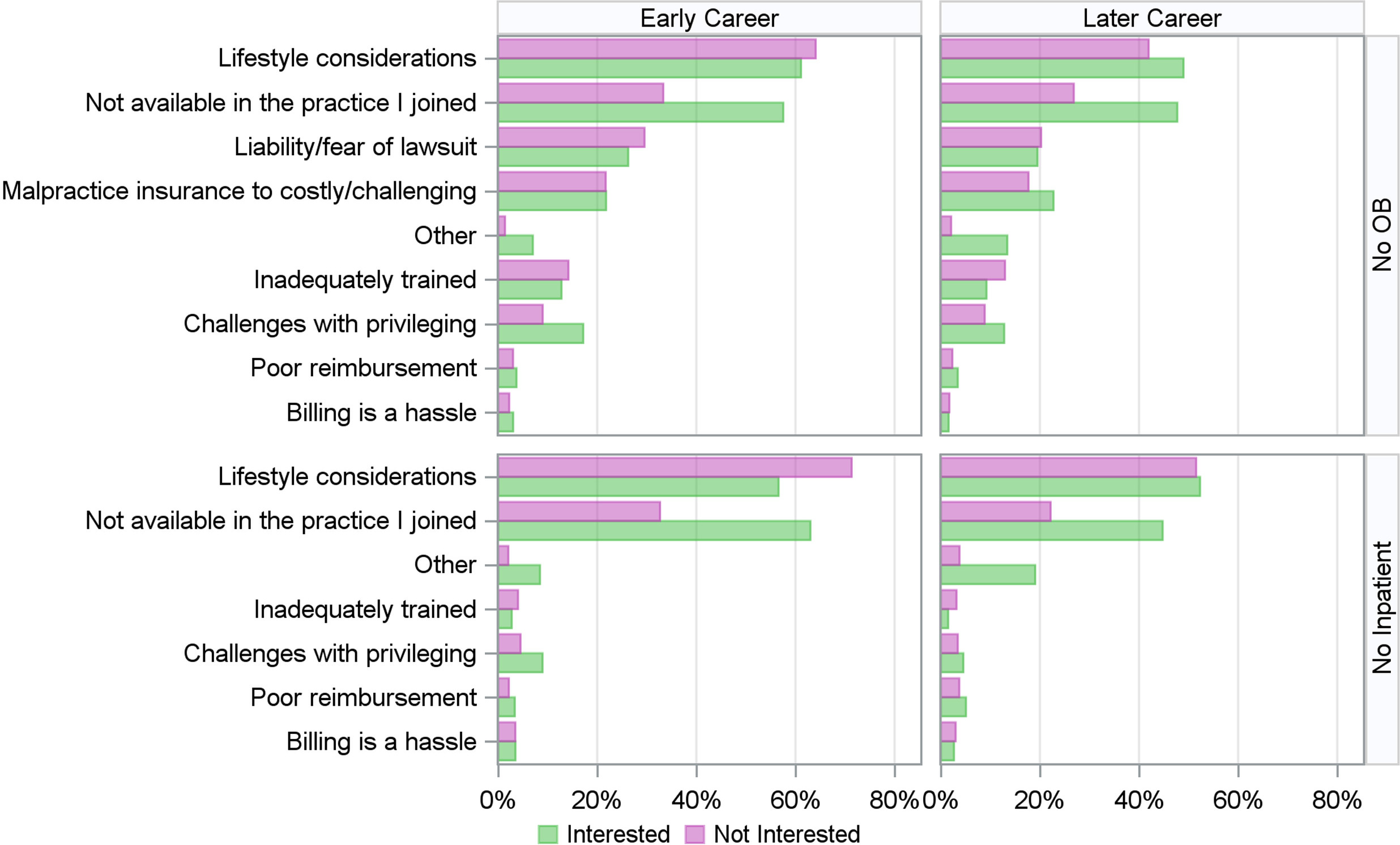
Only 14.7% of early-career family physicians were delivering babies. Of the 85.3% not delivering, 43.4% were interested in doing so (Table 1). Among early-career family physicians who were not delivering babies, 62.8% cited “lifestyle considerations” as a reason and 47.1% said the opportunity was “not available in the practice I joined.” Of those who were interested but not delivering, 57.5% said the opportunity was not available in their practice (Figure 1).
Fewer later-career family physicians were delivering babies (6.7%). Of those not delivering, 46.0% were not interested in doing so. These respondents had similar reasons to early-career family physicians as to why they were not delivering babies: 40.9% selected “not available in the practice I joined” as at least one reason why. Of those who were interested but not delivering, 47.7% said the opportunity to deliver babies was not available in their practice (Figure 1).
Adult Inpatient Care
Early-career family physicians were more likely to be providing adult inpatient care than later-career family physicians (33.2% vs 19.0%). Of the early-career physicians not providing inpatient care, 56.6% were not interested in doing so and 43.3% were interested (Table 1).
Among the early-career physicians not providing inpatient care, 50.8% selected “not available in the practice I joined” as at least one reason why. Of those with interest, 63.0% said providing inpatient care was unavailable in their practice (Figure 1).
Of the 81% of later-career family physicians who were not providing inpatient care, 61.7% were interested and 38.4% were not interested in doing so, and 39.4% selected “not available in the practice I joined” as at least one reason why. Of those with interest, 44.8% said providing inpatient care was not available in their practice (Figure 1).
Delivering Babies and Inpatient Care Availability by Practice Site
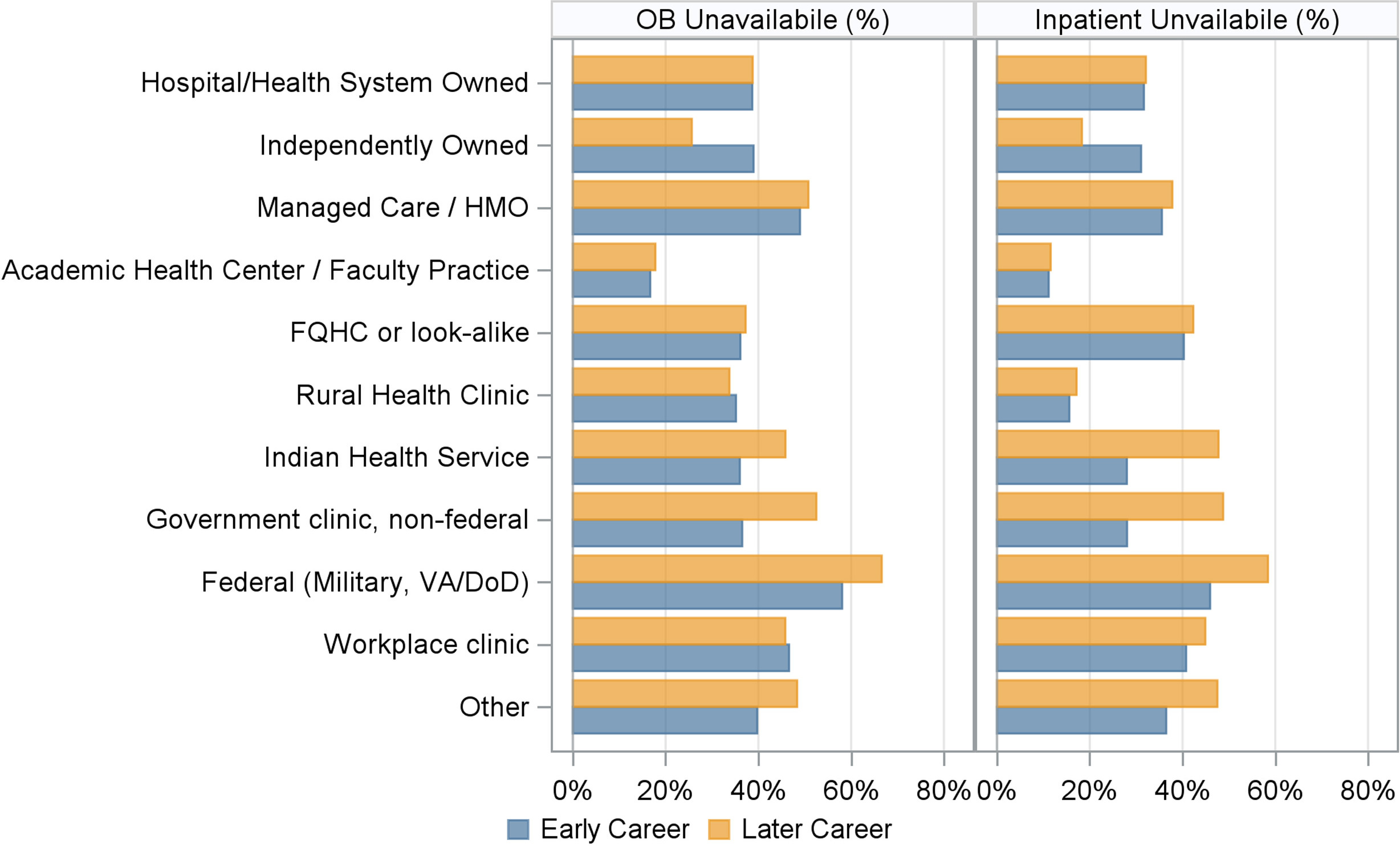
Those in an academic practice were least likely to say that adult inpatient care and delivering babies were not available in the practice they joined. Those who worked for hospital/health systems were less likely to say that the opportunity to provide inpatient care and deliver babies was not available in their practice than those who work at many other types of practices, including federal practice sites, nonfederal government sites, managed care organizations, workplace clinics, and Indian Health Service (Figure 2). Of those who worked in rural health clinics, 35.2% of early-career family physicians and 33.8% of later-career family physicians said delivering babies was not available where they work (Figure 2).
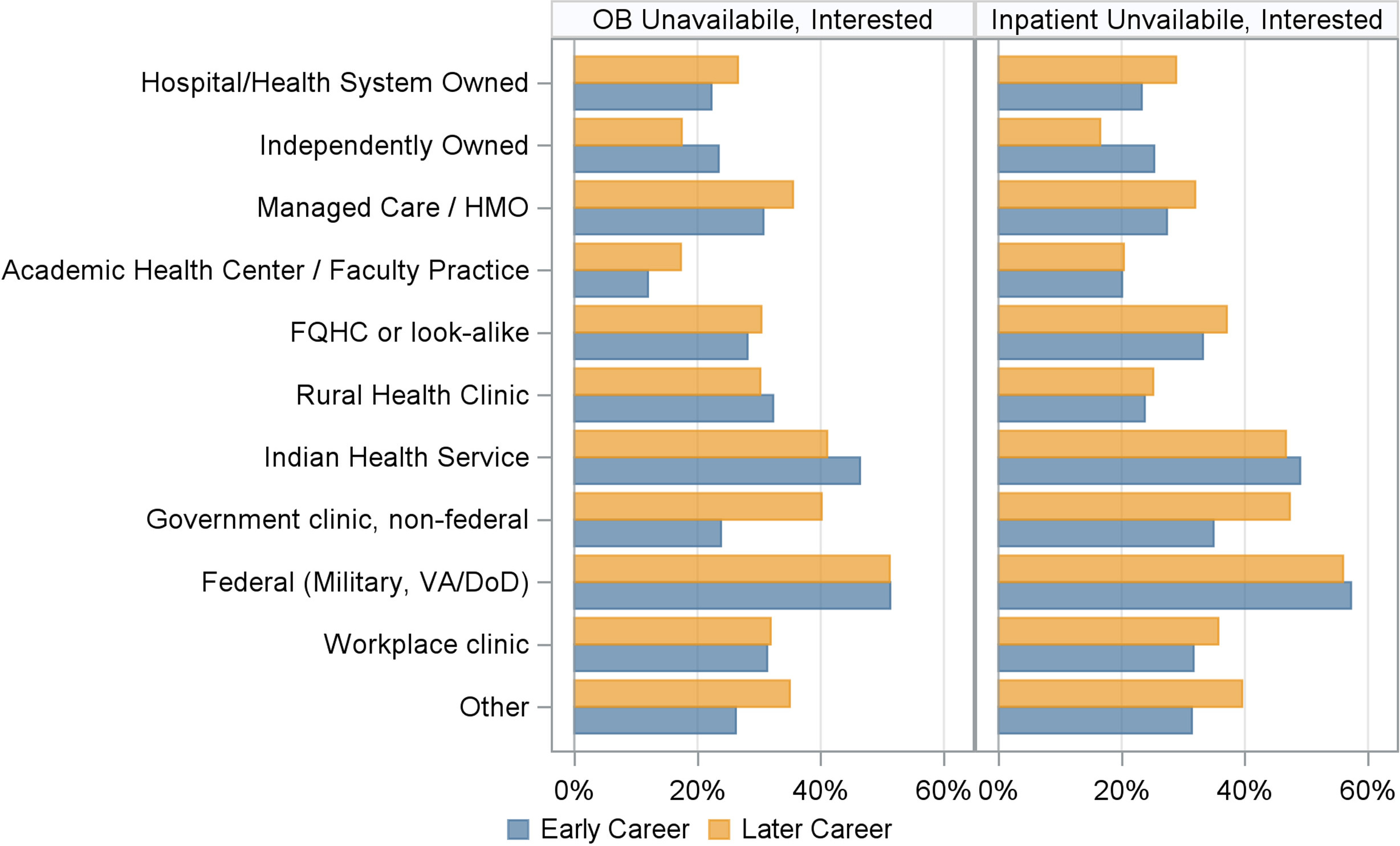
For both early- and later-career physicians, the highest interest in delivering babies and providing inpatient care, without the availability to perform these services, was for those in federal clinics (Figure 3). However, those employed in this setting represent a very small percentage of the overall family physician workforce. In all practice settings except for academic centers, more than 20% (and in some settings, up to 57%) of respondents were interested in delivering babies and providing inpatient care but worked in practices where it was unavailable.
Using a large sample of both early- and later-career family physicians, we found that the reasons for not delivering babies or providing inpatient care are multifactorial and vary by practice setting. We found large variation in availability of providing these services by practice setting, but no direct evidence that health systems were limiting scope of practice more than most other practice types. Specifically, scope limitations defined by employers (lack of availability) were a factor less than half of the time (47.1% for early-career and 40.1% for later-career) among those not delivering babies and half of the time or less (50.8% for early-career and 39.4% for later-career) for inpatient care. As our findings in Figure 1 show, the widest variance between those with no interest and those who may be interested (in both delivering babies and providing inpatient care) is attributed to “not available in the practice I joined.” While we can’t say from these data that their practice or employer is constraining their ability to provide this type of care, it does appear that more family physicians, both early and later career, might deliver babies or provide inpatient care, and thus have a broader scope, if those opportunities were available in their practice.21
Our findings align with previous research and contributes to a conceptual model of how personal, environmental, workplace, and population factors all affect scope of practice.13,15 We recognize that the response options in the survey do not capture personal context or motivations affecting the interplay of practice location and scope. For example, a physician may value living close to family over finding a job that would allow them to deliver babies. We also recognize that a service being available in a job does not necessarily mean that it is desirable. For instance, practices may allow family physicians to deliver babies or provide inpatient care but may not provide inbox management for continuity patients while the physician is on inpatient care, or adjust clinic times to allow for obstetrics call.
Similarly, interest in delivering babies or providing inpatient care may vary based on how care delivery is structured. A prior study found that providing inpatient care or delivering babies in addition to providing continuity care was associated with lower odds of burnout.4 However, our early-career respondents were 3 years out of residency, and it is possible our survey findings were subject to a survival bias where many more tried to deliver such care, but quit before the survey period due to the burden. Thus, the association of lower burnout with expanded scope may only occur where doing so is supported by practice protocols and processes. This calls on health systems to design care delivery to allow family physicians to practice broadly without having to work themselves so hard they risk burnout. Family physicians also have agency and should demand jobs where they have the option to practice to the extent of their training. Continuing to accept positions where practice is restrained may become a self-fulfilling risk.
Our survey identified a cadre of physicians that is not delivering babies or providing inpatient adult care who may be interested but are not able to do so at their primary practice locations, because that option is not available to them. Some family physicians who might otherwise be interested in practicing a broader scope of practice work for employers such as the Veterans Administration and federal clinics, where scope can be limited. Self-sorting into these settings may reflect their desired scope of practice. Conversely, social desirability bias may have led survey respondents to indicate they were interested in providing a broader scope of practice.
Family medicine has been advocating for broad scope practice since at least the 1970s, with documented concerns about the narrowing scope of family medicine dating back to at least the year 2000.22 There is wide agreement about the importance of comprehensive, high-quality primary care,1 but the labeling of what family physicians “should” be doing—as far as scope—is considerably more controversial, and opinions have differed on whether that scope should evolve over time.23 Authors of a 2022 paper on residency redesign articulate “Comprehensiveness doesn’t mean that every residency graduate will engage in the entire scope of clinical care.”24 The Accreditation Council for Graduate Medical Education Family Medicine Program Requirements allow flexibility for programs in the training of obstetrics, with a curriculum requirement specific to “residents who seek the option to incorporate comprehensive pregnancy-related care.”25 An unintended consequence of variation in the scope of family medicine training and practice is that patients may default to specialty care because they don’t know what to expect from family physicians. As Joseph Gravel, MD, stated, “If we can’t agree as a specialty, it will be others who determine our graduates’ scope of practice.”26
Our study is subject to limitations. First, our data are cross-sectional, and we cannot determine causality. Second, the reasons for not providing a service were not ranked in importance and levels of interest among the “not interested” group likely vary. Third, we lack data on why respondents joined the practices they did. Fourth, our categories of practice organization are broad, and there may be variation in how care is organized within a “hospital/health system owned” system and an Academic Health Center. Fifth, our data are limited to physicians in continuity care, which is around 80% of all family physicians.27 Our results may not be generalizable to hospitalists and those working in noncontinuity settings. Sixth, we classified physicians as interested in delivering babies or providing inpatient care if they did not select “not interested” as a reason for not doing so. This could introduce bias, as those with equivocal or mild interest may be misclassified. Many of these limitations might be addressed by future qualitative work exploring family physicians’ reasons for practicing broad or narrow scope family medicine in various practice settings and structures, geographies, and in different career stages.
Our findings suggest that many physicians are interested in providing inpatient care and delivering babies, but are limited by both their employers and personal interests or constraints. With known benefits of broad-scope care3,4, identifying and advocating for work environments that allow family physicians to provide their desired scope, regardless of practice type, should be a goal for the specialty.
Ms Theobald was supported by the American Board of Family Medicine Foundation through participation in their ABFM Visiting Scholars Program and by STFM’s Preceptor Expansion Initiative, which was funded by STFM, the American Board of Family Medicine, and the Physician Assistant Education Association
References
-
National Academies of Sciences, Engineering, and Medicine.
Engineering, and Medicine. Implementing high-quality primary care: Rebuilding the foundation of health care.
The National Academies Press. 2021.
doi:10.17226/25983
-
-
Bazemore A,
Petterson S,
Peterson LE,
Phillips RL Jr.
More comprehensive care among family physicians is associated with lower costs and fewer hospitalizations.
Ann Fam Med.
2015;13(3):206–213.
doi:10.1370/afm.1787
-
Weidner AKH,
Phillips RL Jr,
Fang B,
Peterson LE.
Burnout and scope of practice in new family physicians.
Ann Fam Med.
2018;16(3):200–205.
doi:10.1370/afm.2221
-
Barreto T,
Peterson LE,
Petterson S,
Bazemore AW.
Family physicians practicing high-volume obstetric care have recently dropped by one-half.
Am Fam Physician.
2017;95(12):762.
-
Weidner AKH,
Chen FM.
Changes in preparation and practice patterns among new family physicians.
Ann Fam Med.
2019;17(1):46–48.
doi:10.1370/afm.2337
-
Eden AR,
Morgan ZJ,
Jetty A,
Peterson LE.
Proportion of family physicians caring for children is declining.
J Am Board Fam Med.
2020;33(6):830–831.
doi:10.3122/jabfm.2020.06.200089
-
Peterson LE,
Nasim U,
Madabhushi V.
Declining endoscopic care by family physicians in both rural and urban areas.
J Am Board Fam Med.
2019;32(4):460–461.
doi:10.3122/jabfm.2019.04.190064
-
Nasim U,
Morgan ZJ,
Peterson LE.
The declining scope of practice of family physicians is limited to urban areas.
J Rural Health.
2021;37(4):734–744.
doi:10.1111/jrh.12540
-
Peterson LE,
Fang B,
Puffer JC,
Bazemore AW.
Wide gap between preparation and scope of practice of early career family physicians.
J Am Board Fam Med.
2018;31(2):181–182.
doi:10.3122/jabfm.2018.02.170359
-
Carek PJ,
Mainous AG III.
Are we preparing residents for their actual practices?
J Grad Med Educ.
2022;14(3):251–253.
doi:10.4300/JGME-D-22-00310.1
-
Barreto TW,
Eden AR,
Petterson S,
Bazemore AW,
Peterson LE.
Intention versus reality: family medicine residency graduates’ intention to practice obstetrics.
J Am Board Fam Med.
2017;30(4):405–406.
doi:10.3122/jabfm.2017.04.170120
-
Russell A,
Fromewick J,
Macdonald B,
et al.
Drivers of scope of practice in family medicine: a conceptual model.
Ann Fam Med.
2021;19(3):217–223.
doi:10.1370/afm.2669
-
Reitz R,
Horst K,
Davenport M,
Klemmetsen S,
Clark M.
Factors influencing family physician scope of practice: a grounded theory study.
Fam Med.
2018;50(4):269–274.
doi:10.22454/FamMed.2018.602663
-
Killeen D,
Jetty A,
Peterson LE,
Bazemore A,
Jabbarpour Y.
The association of practice type and the scope of care of family physicians.
J Am Board Fam Med.
2023;36(1):79–87.
doi:10.3122/jabfm.2022.220172R1
-
-
-
LeFevre N,
Young RA.
Factors influencing changing scopes of practice among contemporary graduates of the nation’s largest family medicine residency.
J Am Board Fam Med.
2025;38(1):133–138.
doi:10.3122/jabfm.2024.240172R1
-
Peterson LE.
Using the Family Medicine National Graduate Survey to improve residency education by monitoring training outcomes..
Fam Med.
2021;53(7):622–625.
doi:10.22454/FamMed.2021.719992
-
Peterson LE,
Fang B,
Phillips RL Jr,
Avant R,
Puffer JC.
The American Board of Family Medicine’s data collection method for tracking their specialty.
J Am Board Fam Med.
2019;32(1):89–95.
doi:10.3122/jabfm.2019.01.180138
-
Barreto TW,
Eden AR,
Hansen ER,
Peterson LE.
Barriers faced by family medicine graduates interested in performing obstetric deliveries.
J Am Board Fam Med.
2018;31(3):332–333.
doi:10.3122/jabfm.2018.03.170427
-
White B.
Are the edges of family practice being worn away?
Fam Pract Manag.
2000;7(2):35–40.
-
Readers Speak Out on Family Physicians’ Scope of Practice.
Fam Pract Manag.
2000;7(5):43–46.
-
Green LA,
Miller WL,
Frey JJ 3rd,
et al.
The time is now: a plan to redesign family medicine residency education.
Fam Med.
2022;54(1):7–15.
doi:10.22454/FamMed.2022.197486
-
-
-
Carek PJ,
Cheng Y,
Bazemore AW,
Peterson LE.
Variation in practice patterns of early- and later-career family physicians.
J Am Board Fam Med.
2024;37(1):35–42.
doi:10.3122/jabfm.2023.230176R1



There are no comments for this article.