Background and Objectives: Undergraduate medical education provides limited formal training on vaccine hesitancy. This study evaluated a student-led workshop for third-year medical students on vaccine hesitancy, emphasizing historical mistrust in Black, indigenous, and people of color (BIPOC) communities and strategies to build confidence in addressing it.
Methods: During a family medicine clerkship rotation, 158 students completed a 90-minute workshop on vaccine hesitancy. The session addressed systemic racism and introduced three evidence-based communication tools, followed by role-play practice. At the end of the clerkship, semistructured focus groups explored the intervention’s impact on participants’ approaches to vaccine hesitancy. Students also completed pre- and postworkshop surveys to assess attitudes, confidence, and skills regarding vaccine hesitancy.
Results: Focus group analysis revealed five major themes: (1) variability in formal education addressing vaccine hesitancy; (2) the workshop’s positive impact on students’ skills, knowledge and confidence surrounding vaccine hesitancy; (3) opportunities to improve vaccine hesitancy education; (4) barriers to vaccine acceptance and administration; and (5) the value of student-led workshops and peer learning. Survey results demonstrated a statistically significant increase in students self-reported confidence in the ability to influence vaccine-hesitant individuals, educate patients on vaccination benefits, communicate effectively with hesitant patients, and dispel common vaccine myths (P<.001).
Conclusion: Medical students receive limited formal education in vaccine hesitancy. Preliminary results suggest that this student-led workshop effectively increased students’ confidence in addressing vaccine-hesitant patients and their awareness of vaccine hesitancy in BIPOC and other minority communities. Other institutions could adapt similar curricula for health professional students, trainees, or clinicians.
Vaccine communication training is not standardized in medical school curricula, leaving gaps in counseling skills. One study found that when confronted with COVID-19 vaccine misinformation, 89.0% of medical students (n=202) would avoid conflict, while only 9.3% (n=21) would correct it.1 Another study reported that only 40% of 214 medical students felt knowledgeable about the human papillomavirus (HPV) vaccine and comfortable counseling patients about it.2
Racial and ethnic minority populations—particularly Black populations—consistently show lower vaccination uptake than White populations.3-5 African American patients have reported greater barriers to vaccination, higher influenza-specific hesitancy, stronger endorsement of conspiracy beliefs, and preference for natural alternatives compared to White patients.6 Trust building is critical for addressing vaccine hesitancy in Black, indigenous, and people of color (BIPOC) communities. In standardized patient encounters, residents perceived as more trustworthy scored higher on clinical and vaccine hesitancy (VH) communication measures.7
Vaccine hesitancy curricula can improve trainee skills. A pediatric residency program addressing vaccine misconceptions, communication strategies, and role-playing increased self-reported knowledge and comfort.8 Similarly, training third- and fourth-year medical students on COVID-19 vaccine counseling using using the "ask-respond-tell-seek" framework and motivational interviewing techniques increased confidence and comfort.9 This workshop aimed to strengthen medical students’ confidence in addressing VH, with a focus on mistrust in BIPOC communities. We hypothesized that students would report increased use of evidence-based communication tools and, secondarily, increased confidence in addressing VH.
Workshop Design and Implementation
The 90-minute student-led workshop addressed factors influencing vaccine uptake, including the role of systemic racism in vaccine hesitancy among communities of color. Conducted during the family medicine clerkship orientation at an urban private medical school with eight cohorts of third-year students (N=158) from May 2023-2024, student facilitators introduced three evidence-based tools: presumptive language, motivational interviewing, and persistence. Presumptive language presents vaccination as expected10; motivational interviewing uses a collaborative, patient-centered approach to explore ambivalence11; and persistence involves respectful, continued recommendation.12. We focused on influenza, COVID-19, and human papillomavirus (HPV) vaccines for role plays, as these are commonly encountered during the clerkship.
Data Collection and Analysis
Three 30-minute focus groups at the end of the clerkship explored the workshop’s impact on VH, including prior experiences, confidence, and use of tools in addressing VH. No attending physicians or administrators participated; 44 of the invited students attended. Sessions were audio-recorded, deidentified, and analyzed by four authors to reach thematic consensus, using content analysis that included inductive and deductive approaches.
To supplement the primary analysis, we conducted pre- and postworkshop Qualtrics surveys. Survey questions were adapted from validated instruments and reviewed for content validity.13-14 We analyzed matched pre-and postsurvey responses with SPSS-29 software (IBM Corp) and paired t tests. Participation was voluntary and did not affect clerkship grades. The study was deemed exempt from review by the Thomas Jefferson University Institutional Review Board.
Focus Group Results
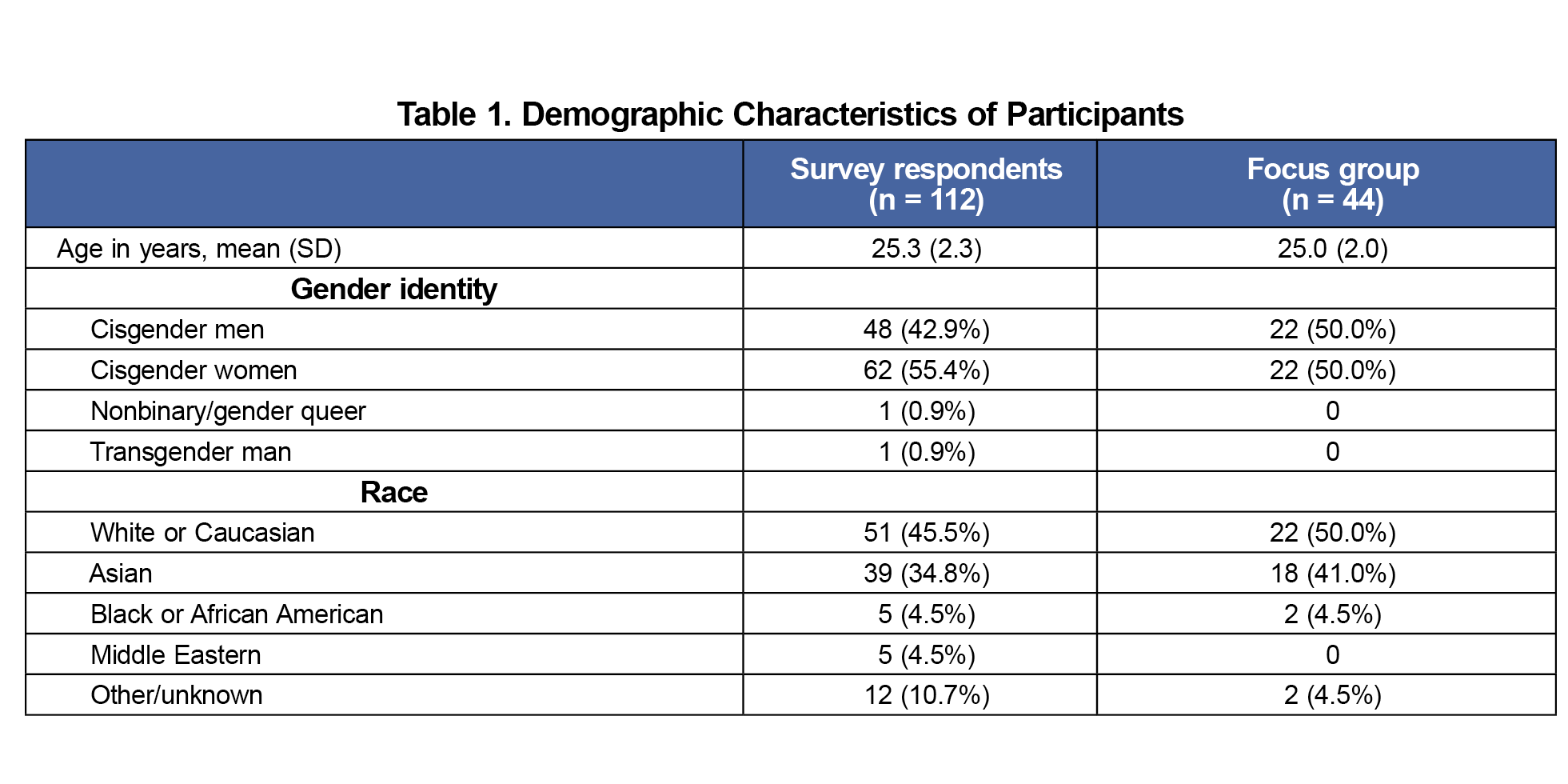
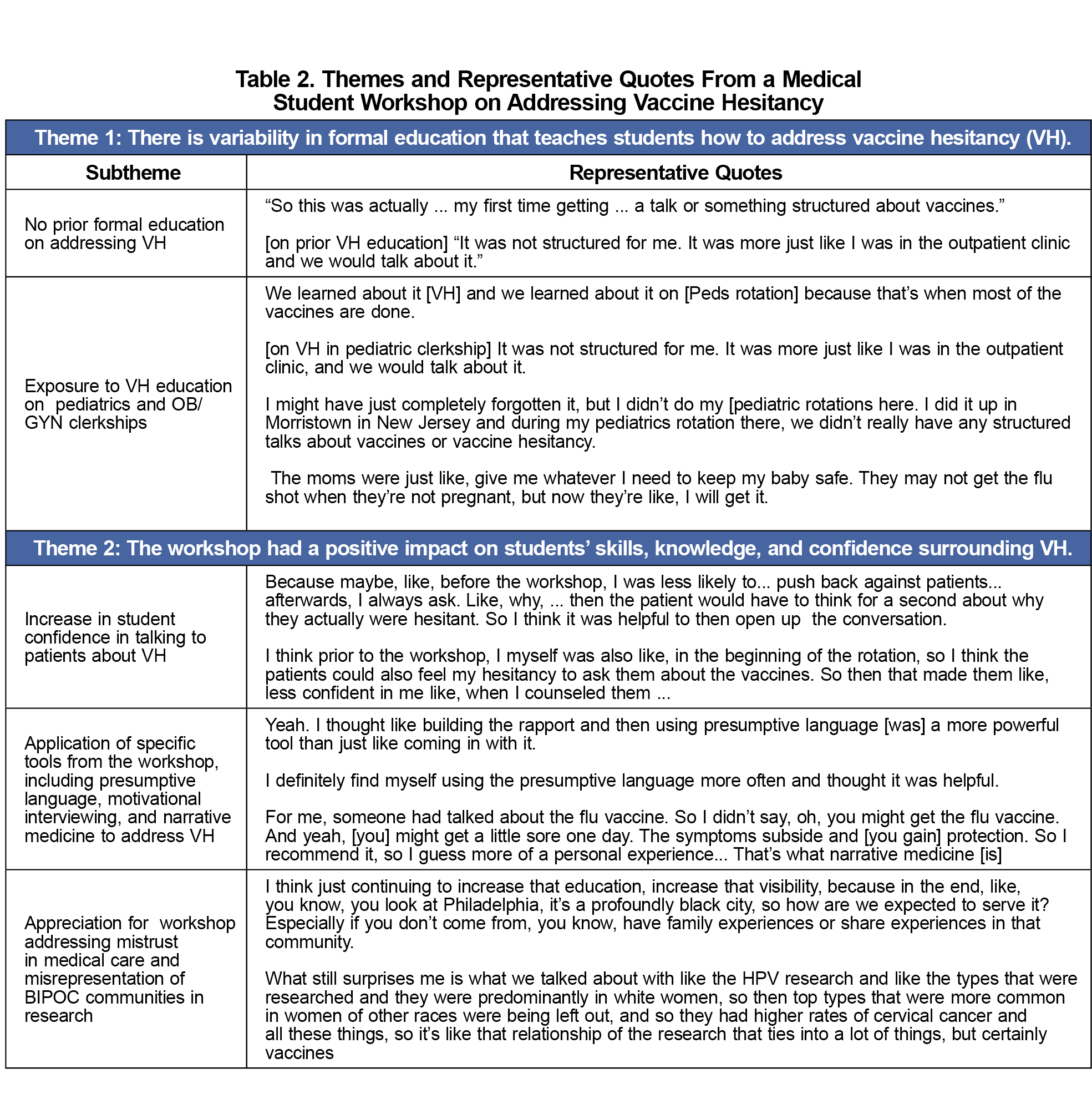
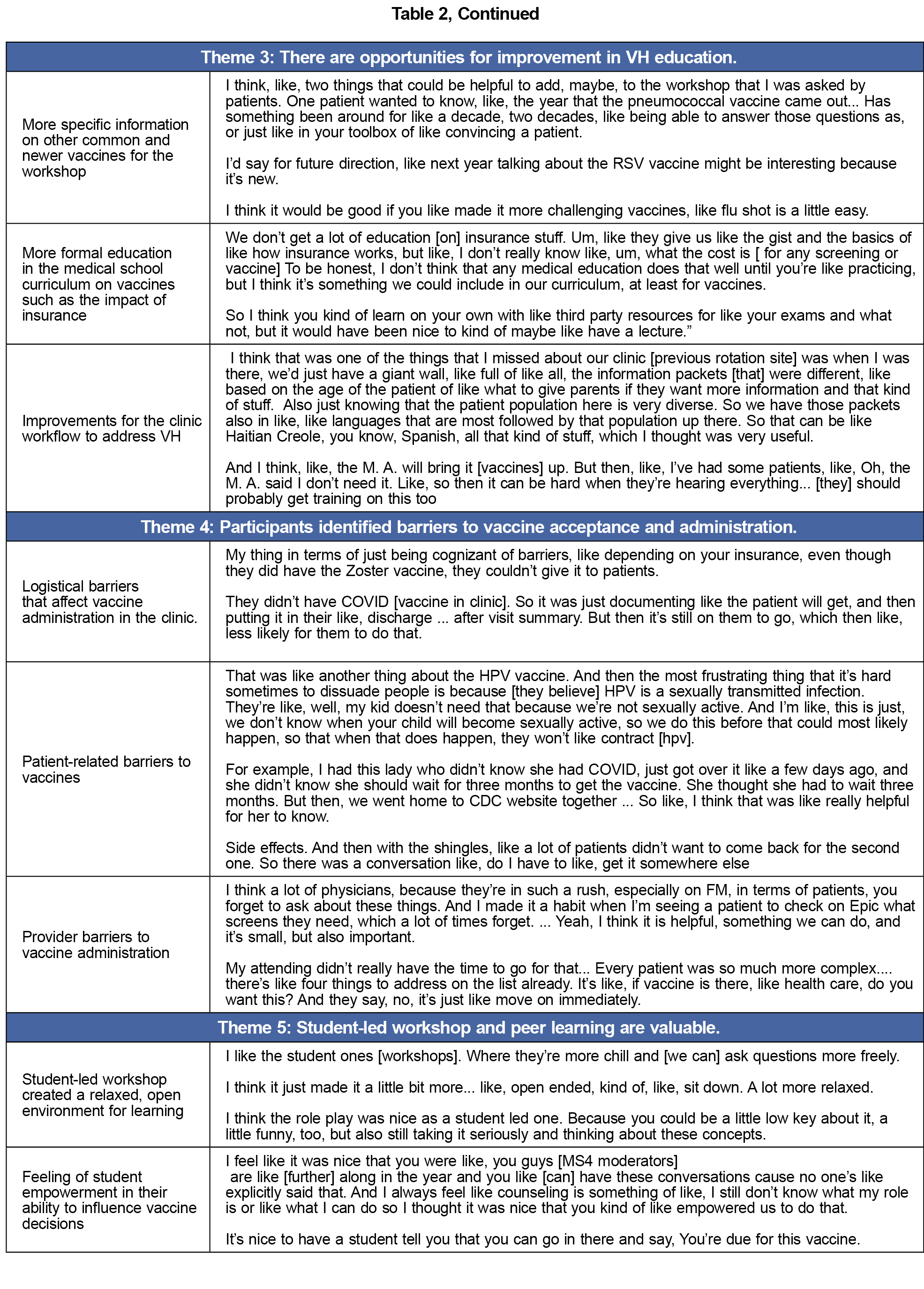
Table 1 lists participant demographics. Five themes emerged, with representative quotes in Table 2.
Theme 1: There is variability in formal education for students on addressing VH.
Most students reported little to no formal training on VH, aside from a single preclinical lecture. Limited experience was gained during pediatric and obstetrics and gynecology rotations.
Theme 2: The workshop positively impacted students’ skills, knowledge, and confidence surrounding VH.
Students valued the workshop’s focus on medical mistrust and misrepresentation of BIPOC communities in research, and they reported increased willingness to discuss vaccinations, explore reasons for hesitancy, and apply workshop tools.
Theme 3: There are opportunities for improvement in VH education.
Students requested additional content on shingles, pneumonia, and respiratory syncytial virus vaccines, insurance coverage, and more interactive practice.
Theme 4: Participants identified barriers to vaccine acceptance and administration.
Identified barriers included insurance coverage, vaccine availability, time constraints, fear of side effects, limited understanding of the vaccine purpose, and prior negative experiences.
Theme 5: Student-led workshop and peer learning are valuable.
Participants valued the relaxed learning environment and empowerment fostered by student-led instruction.
Supplemental Survey Results
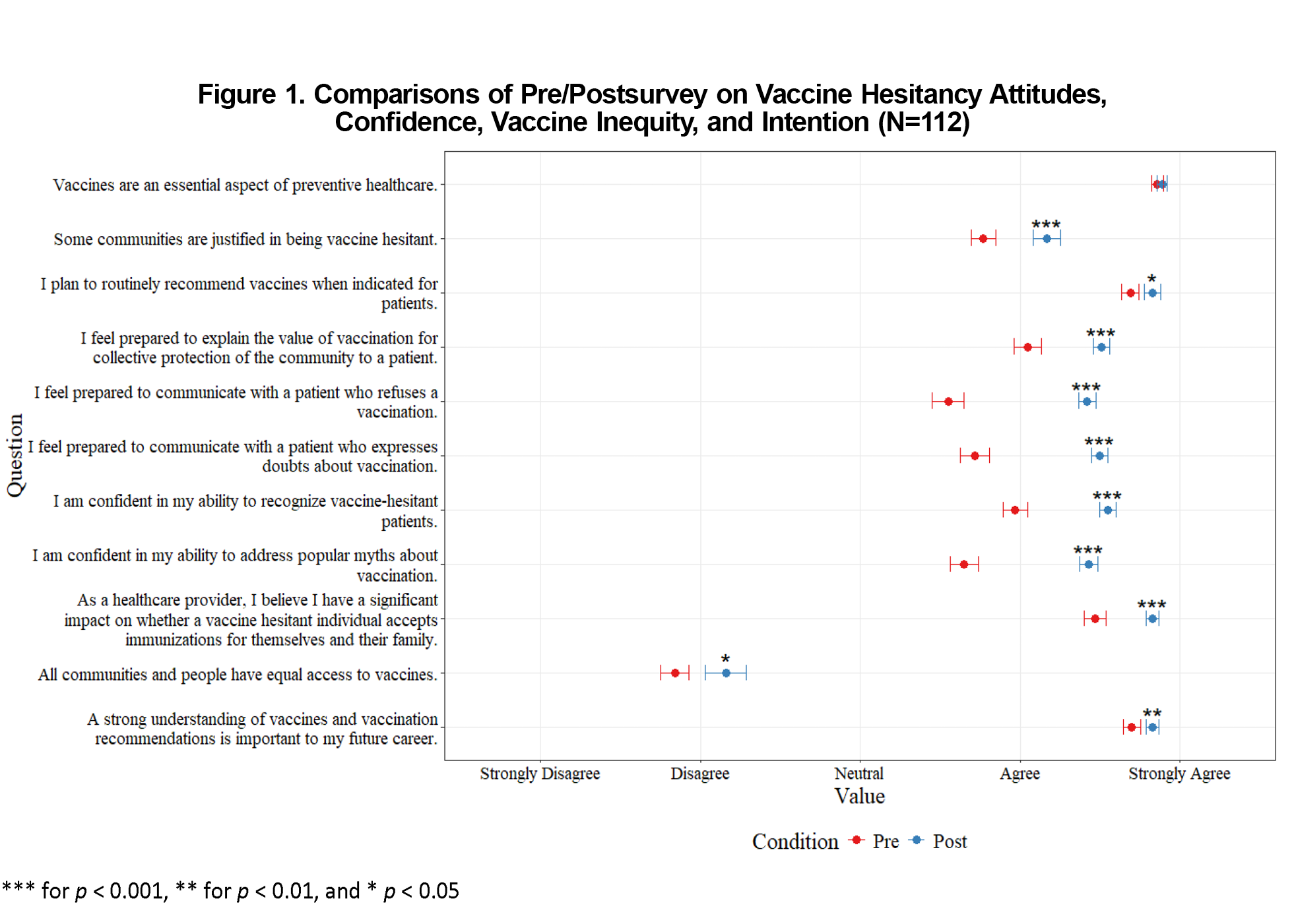
One hundred twelve students (71%) completed matched pre- and postworkshop surveys. Postsession scores increased significantly for eight of 11 items (Figure 1), including self-reported confidence in influencing vaccine-hesitant individuals, educating patients, communicating effectively, and dispelling myths (P<.001). Agreement that “some communities are justified in being vaccine hesitant” also increased (P<.001).
Our workshop addressed medical mistrust among BIPOC communities by framing vaccine disparities within the history of systemic racism in medicine and emphasizing trust-building. In Strully’s study,7 residents perceived as trustworthy scored higher on clinical and communication measures with standardized patients, with patient trust strongly influenced by education- and counseling-focused behaviors. In contrast, less effective residents were described as overly directive and unable to instill confidence.7 Our qualitative feedback provided insight into the workshop’s impact on students’ increased willingness to explore underlying reasons for VH, provide VH education within the context of historical racism, and apply these communication tools with vaccine-hesitant patients. Our quantitative survey data reinforce these findings and showed increased self-reported confidence and comfort in addressing VH. This suggests that structured educational programs may increase students' confidence in engaging vaccine-hesitant patients and underscores the importance of prioritizing trust-building communication to counter health care discrimination.
Increasing medical students’ comfort and confidence in addressing vaccine hesitancy is critical for effective patient communication. When students feel prepared to engage in respectful, evidence-based conversations, they are more likely to listen actively, acknowledge concerns, and provide clear information without appearing dismissive. These behaviors are particularly important in BIPOC communities, where historical and systemic inequities have contributed to medical mistrust. Equipping future physicians with these skills may reduce vaccination barriers and strengthen patient-clinician relationships.
Students identified areas for improvement for future curricular development, with requests for additional vaccine-specific content, insurance coverage considerations, and more practice. The workshop’s interactive format—including role-playing—provided authentic practice, a strategy supported by prior studies.8,15 Participants also identified barriers to vaccine uptake and patient concerns about side effects, both of which reflect challenges in clinical practice. Addressing VH education in isolation may be insufficient without also preparing students to navigate these system-level barriers.
This single-institution study was limited by underrepresentation of Black and Latinx students relative to national averages and reliance on self-assessment measures, though findings were supported by qualitative feedback. Future research should incorporate objective, standardized clinical examinations and clinical outcome measures.
In conclusion, a student-led workshop improved students’ confidence, comfort, and application of communication tools in addressing vaccine hesitancy, an area of limited formal training. Integrating structured, interactive curricula that acknowledge historical mistrust may strengthen vaccine communication and reduce barriers to vaccination in marginalized communities.
Acknowledgments
The authors thank Dr David Bales for his guidance in the design and development of the vaccine hesitancy workshop curriculum. They also acknowledge Dr Amy Leader for her valuable advice and support in shaping the study’s research methods and evaluation approach.
Presentations:
Presented Lecture: “Confronting Vaccine Hesitancy: An Innovative Student-Led Curriculum for a Family Medicine Clerkship” at 2023 STFM Medical Student Education Conference, New Orleans, LA.
Presented Lecture: “Confronting Vaccine Hesitancy: A Qualitative Assessment of an Innovative Student-Led Curriculum for a Family Medicine Clerkship” at 2024 STFM Medical Student Education Conference, Atlanta, GA.
Conflicts of Interest: The authors have no conflicts of interest to declare.
References
- Frisch M, Chaudhary W, Zhang X, Parkas V, Forsyth B. Addressing COVID-19 vaccine hesitancy: the role of medical students. Med Sci Educ. 2022;32(6):1299-1303. doi:10.1007/s40670-022-01670-2
- Afonso NM, Kavanagh MJ, Swanberg SM, Schulte JM, Wunderlich T, Lucia VC. Will they lead by example? Assessment of vaccination rates and attitudes to human papilloma virus in millennial medical students. BMC Public Health. 2017;17(1):35. doi:10.1186/s12889-016-3969-x
- Iezadi S, Kolivand P, Namdar P, Saberian P, Gholipour K, Azari S. Racial and ethnic disparities in COVID-19 vaccination: a systematic review and meta-analysis. Arch Public Health. 2025;83(1):261. doi:10.1186/s13690-025-01740-y
- Centers for Disease Control and Prevention. Racial and ethnic disparities in flu vaccination coverage. Published 2022. Accessed November 12, 2025. https://www.cdc.gov/vitalsigns/flu-inequities/index.html
- Gelman A, Lee J, Zhang H, et al. Racial/ethnic differences in HPV vaccine uptake among US young adults: a systematic review and meta-analysis. Vaccines (Basel). 2025;13(2):98. doi:10.3390/vaccines13020098
- Quinn SC, Jamison A, Freimuth VS, An J, Hancock GR, Musa D. Exploring racial influences on flu vaccine attitudes and behavior: results of a national survey of White and African American adults. Vaccine. 2017;35(8):1167-1174. doi:10.1016/j.vaccine.2016.12.046
- Strully KW, Harrison TM, Pardo TA, Carleo-Evangelist J. Strategies to address COVID-19 vaccine hesitancy and mitigate health disparities in minority populations. Front Public Health. 2021;9:645268. doi:10.3389/fpubh.2021.645268
- Norton ZS, Olson KB, Sanguino SM. Addressing vaccine hesitancy through a comprehensive resident vaccine curriculum. MedEdPORTAL. 2022;18:11292. doi:10.15766/mep_2374-8265.11292
- Pelin C, Vasser M, Cavuoto Petrizzo M, et al. Mitigating misinformation toolkit: a medical student role-play curriculum on communication techniques to facilitate vaccine misinformation conversations. MedEdPORTAL. 2024;20:11439. doi:10.15766/mep_2374-8265.11439
- Jacobson RM, St Sauver JL, Griffin JM, MacLaughlin KL, Finney Rutten LJ. How health care providers should address vaccine hesitancy in the clinical setting: evidence for presumptive language in making a strong recommendation. Hum Vaccin Immunother. 2020;16(9):2131-2135. doi:10.1080/21645515.2020.1735226
- Limaye RJ, Opel DJ, Dempsey A, et al. Communicating with vaccine-hesitant parents: a narrative review. Acad Pediatr. 2021;21(4S)(suppl):S24-S29. doi:10.1016/j.acap.2021.01.018
- Williams JTB, O’Leary ST, Nussbaum AM. Caring for the vaccine-hesitant family: evidence-based alternatives to dismissal. J Pediatr. 2020;224:137-140. doi:10.1016/j.jpeds.2020.05.029
- Barton SM, Calhoun AW, Bohnert CA, et al. Standardized vaccine-hesitant patients in the assessment of the effectiveness of vaccine communication training. J Pediatr. 2022;241:203-211.e1. doi:10.1016/j.jpeds.2021.10.033
- Kernéis S, Jacquet C, Bannay A, et al; EDUVAC Study Group. Vaccine education of medical students: a nationwide cross-sectional survey. Am J Prev Med. 2017;53(3):e97-e104. doi:10.1016/j.amepre.2017.01.014
- Fiorito TM, Krilov LR, Nonaillada J. Human papillomavirus knowledge and communication skills: a role-play activity for providers. MedEdPORTAL. 2021;17:11150. doi:10.15766/mep_2374-8265.11150



There are no comments for this article.